
Why Museums Teach Better Than Textbooks: The Neuroscience of Spatial Learning
Discover how spatial memory and embodied cognition make museum-style learning more effective than traditional textbooks, backed by cognitive science.
The Spatial Memory Advantage: Why Location Matters for Learning
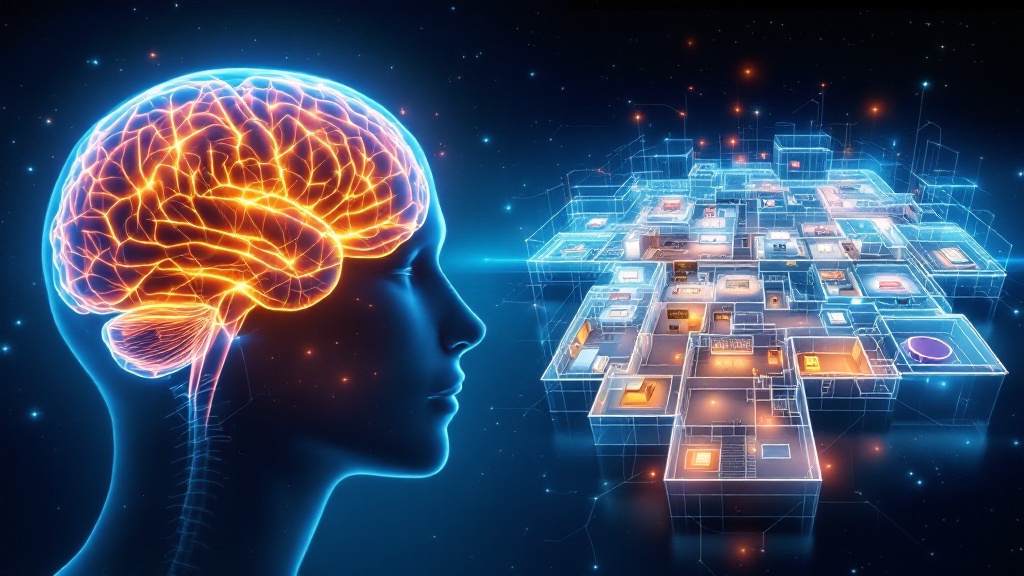
When you recall a childhood memory, you don't just remember facts—you remember where you were standing, what the room looked like, and how you moved through space. This phenomenon reveals a fundamental truth about human cognition: our brains are wired for spatial learning. Neuroscience research consistently shows that information tied to physical or virtual locations creates stronger, more durable neural pathways than information encountered in linear formats like textbooks.
The hippocampus, our brain's navigation center, doesn't just help us find our way—it's also critical for memory formation. Studies using fMRI imaging reveal that when we navigate spaces while learning, we activate both spatial and semantic memory systems simultaneously, creating redundant encoding that dramatically improves memory retention. This is why you can remember the layout of your childhood home decades later, but struggle to recall what you read in a textbook last month.
Museum education leverages this neurological reality by organizing knowledge spatially. When learners navigate through exhibition halls and timeline corridors, they're not just consuming information—they're building a mental map that serves as a retrieval scaffold. Each artifact's location becomes a memory anchor, transforming abstract concepts into spatially-grounded experiences that the brain naturally preserves.
Embodied Cognition: How Movement Deepens Understanding
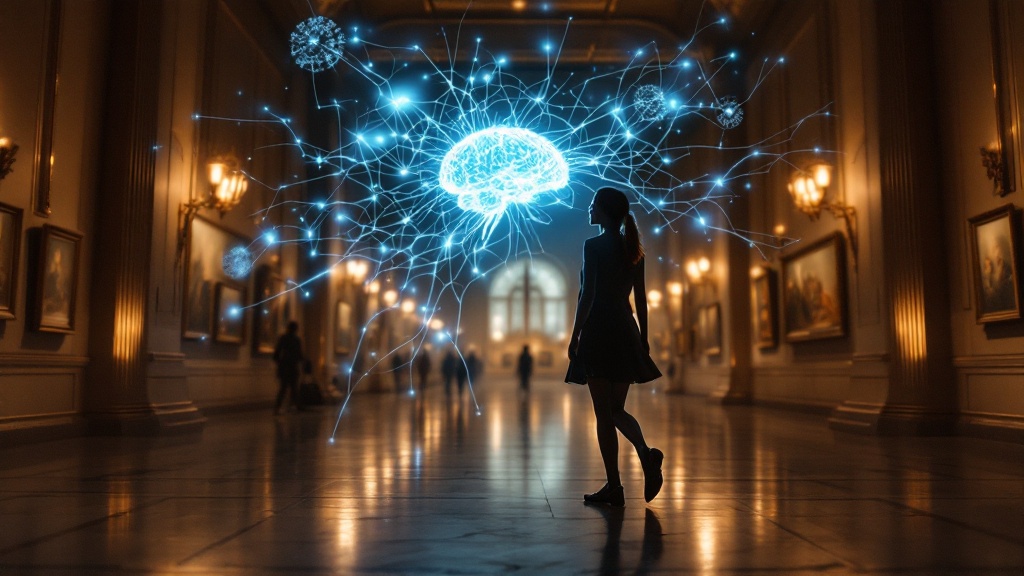
Traditional pedagogy treats the mind as a computer that processes abstract symbols, but decades of cognitive science research tell a different story. Embodied cognition theory demonstrates that our physical experiences—how we move, gesture, and interact with our environment—are inseparable from how we think and learn. When students sit motionless reading textbooks, they're fighting against millions of years of evolution that designed human learning to happen through physical exploration.
Research by cognitive scientists like Lawrence Barsalou shows that understanding concepts activates the same sensorimotor regions of the brain used during actual physical experiences. When you navigate a virtual museum corridor from the Renaissance to the Enlightenment, your brain doesn't just process temporal relationships abstractly—it simulates the physical journey, engaging motor cortex regions alongside conceptual processing areas. This multisensory engagement creates richer, more interconnected knowledge structures.
Museum curation principles harness embodied cognition by transforming information consumption into an active journey. Instead of passively scrolling through text, learners make choices about where to go next, physically (or virtually) turn to examine different artifact perspectives, and experience the cognitive satisfaction of discovery. These embodied interactions aren't decorative—they're fundamental to how our brains construct meaning and retain information over time.
From Transactional to Contemplative: The Emotional Architecture of Learning
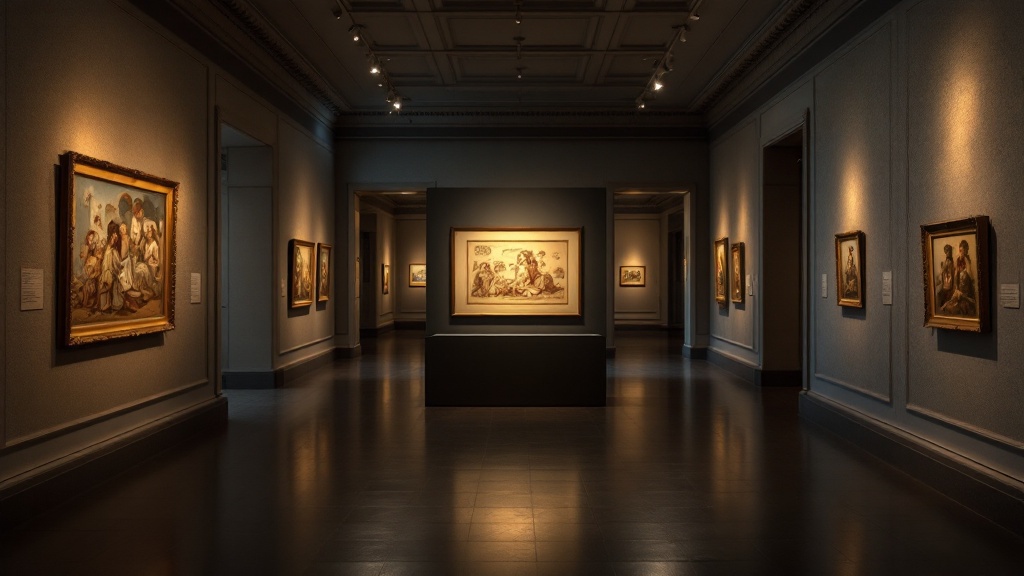
The sterile interface of traditional knowledge platforms reflects an outdated assumption: that learning is purely cognitive, divorced from emotion and aesthetic experience. Yet neuroscience reveals that emotion and cognition are deeply intertwined—the amygdala and hippocampus work in concert, with emotional arousal significantly enhancing memory consolidation. Museum education succeeds precisely because it creates emotional engagement through careful curation, aesthetic design, and narrative flow that textbooks cannot replicate.
When learners encounter knowledge as beautifully framed artifacts rather than dense text blocks, their brains respond differently. The aesthetic experience activates reward pathways, releasing dopamine that tags information as significant and worthy of long-term storage. Curated journeys through connected topics create narrative coherence that our brains crave—we're storytelling creatures, and information embedded in spatial narratives becomes part of our personal knowledge story rather than isolated facts to memorize.
This is why a student exploring Leonardo da Vinci's inventions in a virtual History hall, then following a doorway to see how those ideas connect to modern engineering in the Science hall, retains more than one who reads the same information linearly. The spatial progression creates anticipation, the doorway metaphor provides narrative structure, and the physical act of choosing to explore deeper activates agency and ownership. Memory retention isn't just about repetition—it's about creating experiences worth remembering, transforming transactional information lookup into contemplative discovery that honors how human minds actually learn.